Introduction
When a home is listed for sale in Nassau County, homeowners naturally hope to attract qualified buyers quickly. But two similar-looking homes can have very different experiences: one may receive strong interest soon after listing, while another stays available for weeks or longer.
A longer time on the market does not automatically mean something is wrong with a property. Price, condition, location, financing, buyer expectations, and the number of competing homes can all affect the pace of a sale. The important question is not simply how long a home has been listed, but what the market response is telling the seller.
1. The Asking Price Does Not Match Current Buyer Expectations
An asking price can be reasonable from an owner’s perspective and still be higher than buyers are willing to pay. Buyers compare recently sold homes, active listings, property taxes, square footage, condition, and layout—not just the price a neighbor once achieved.
For example, a home in Farmingdale may compete with different alternatives than a similar property in Plainview or Merrick. Even within one town, school district boundaries, property features, and street location can change the comparison.
What sellers can do:
Review recent comparable closed sales and current competing listings with a local real estate professional. If showings are scarce or feedback consistently points to price, reassess the strategy promptly rather than relying on an arbitrary price reduction.
2. Photos and Online Presentation Are Not Making a Strong First Impression
For many buyers, the first showing happens online. Dark photos, cluttered rooms, missing exterior images, or an incomplete property description can make an otherwise appealing home easy to overlook.
What sellers can do: Prepare the property before photography, use clear and accurate images, and highlight meaningful features such as usable living space, updates, storage, outdoor areas, and parking. A floor plan or video walkthrough may help buyers understand the layout. Avoid digitally altering images in a way that misrepresents the property.
3. Visible Repairs or Maintenance Issues Create Uncertainty
Buyers often notice peeling paint, water stains, worn flooring, damaged trim, or aging systems. A small visible issue can prompt questions about less visible maintenance. Not every home needs a full renovation, but deferred upkeep may affect how buyers evaluate value and risk.
What sellers can do: Prioritize safety concerns, water intrusion, obvious defects, and modest improvements that make the property feel cared for. Discuss major repairs and required disclosures with the appropriate licensed professionals. Avoid assuming every expensive upgrade will be recovered in the sale price.
4. The Home Is Difficult to Show
Even an attractive listing can lose momentum when buyers have very limited access. Short showing windows, frequent cancellations, or long notice requirements may cause buyers to tour competing properties first.
What sellers can do: Offer reasonable showing flexibility, keep the property ready for visits, and establish a clear access plan. Sellers should balance convenience with household needs, privacy, and security.
5. The Listing Is Not Reaching the Right Buyers
Good marketing is more than placing a sign in the yard. The listing should be accurate, complete, and visible through appropriate channels. Inadequate descriptions, incorrect details, poor-quality media, or weak follow-up can reduce opportunities for qualified buyers to engage.
What sellers can do:
Verify listing facts, review the marketing plan, and make sure inquiries and showing requests receive timely responses. Tailor the presentation to the property’s actual strengths without using language that could violate fair housing requirements.
6. Buyer Affordability and Financing Affect Demand
A buyer may like a property but hesitate because of the total monthly cost. In Nassau County, buyers often evaluate mortgage payments alongside property taxes, insurance, utilities, and anticipated repairs. Changes in borrowing costs or loan qualification can narrow the pool of ready buyers.
What sellers can do: Understand how the home’s asking price and carrying costs compare with alternatives. Consider the strength and terms of offers—not just the headline price—and work with the buyer’s lender, attorneys, and other professionals as appropriate.
7. The Property Has a Smaller or More Specialized Buyer Pool
An unusual floor plan, a busy-road location, limited parking, a high-maintenance property, or a home requiring substantial renovation may appeal to a narrower group of buyers. That does not make the property unsellable; it may simply require more time and a more targeted strategy.
What sellers can do: Identify the most likely buyer needs, communicate the home’s genuine advantages, and set a realistic pricing and marketing plan. Be candid about trade-offs rather than trying to conceal them.
What to Do If Your Nassau County Home Is Not Selling
Instead of making multiple changes at once, start with a structured review. Look at online interest, the number of showings, buyer comments, nearby competing listings, and any offers received. Each signal can suggest a different issue.
Low online interest may point to price or presentation. Plenty of showings but no offers may indicate a mismatch between expectations and what buyers see in person. Repeated comments about the same concern deserve attention, although individual opinions should not be treated as proof.
Ask your agent to revisit the comparative market analysis and discuss a specific next-step plan: refresh photography, improve access, address a repair, revise the listing description, or adjust price when the evidence supports it.
A Local Perspective Matters
Nassau County is not one uniform housing market. Buyer expectations can differ across Bethpage, East Meadow, Hicksville, Garden City, Massapequa, Syosset, and other Long Island communities. Property type, condition, taxes, school district boundaries, and recent neighborhood sales all matter.
The goal is not to promise a quick sale. It is to position the home accurately, respond to market feedback, and make informed decisions as conditions change.
Frequently Asked Questions
Is a home that has been listed for a long time always overpriced? No. Price is one possible factor, but access, condition, marketing, property characteristics, and market conditions may also contribute.
Should I reduce the asking price immediately? Not necessarily. First review comparable sales, competing listings, showings, and buyer feedback. A well-supported price adjustment may help, but the right response depends on the evidence.
Can better photos help a listing that has gone quiet? They can improve how the home is presented online, especially if the original photos were poor. Photography alone cannot overcome every pricing or property issue.
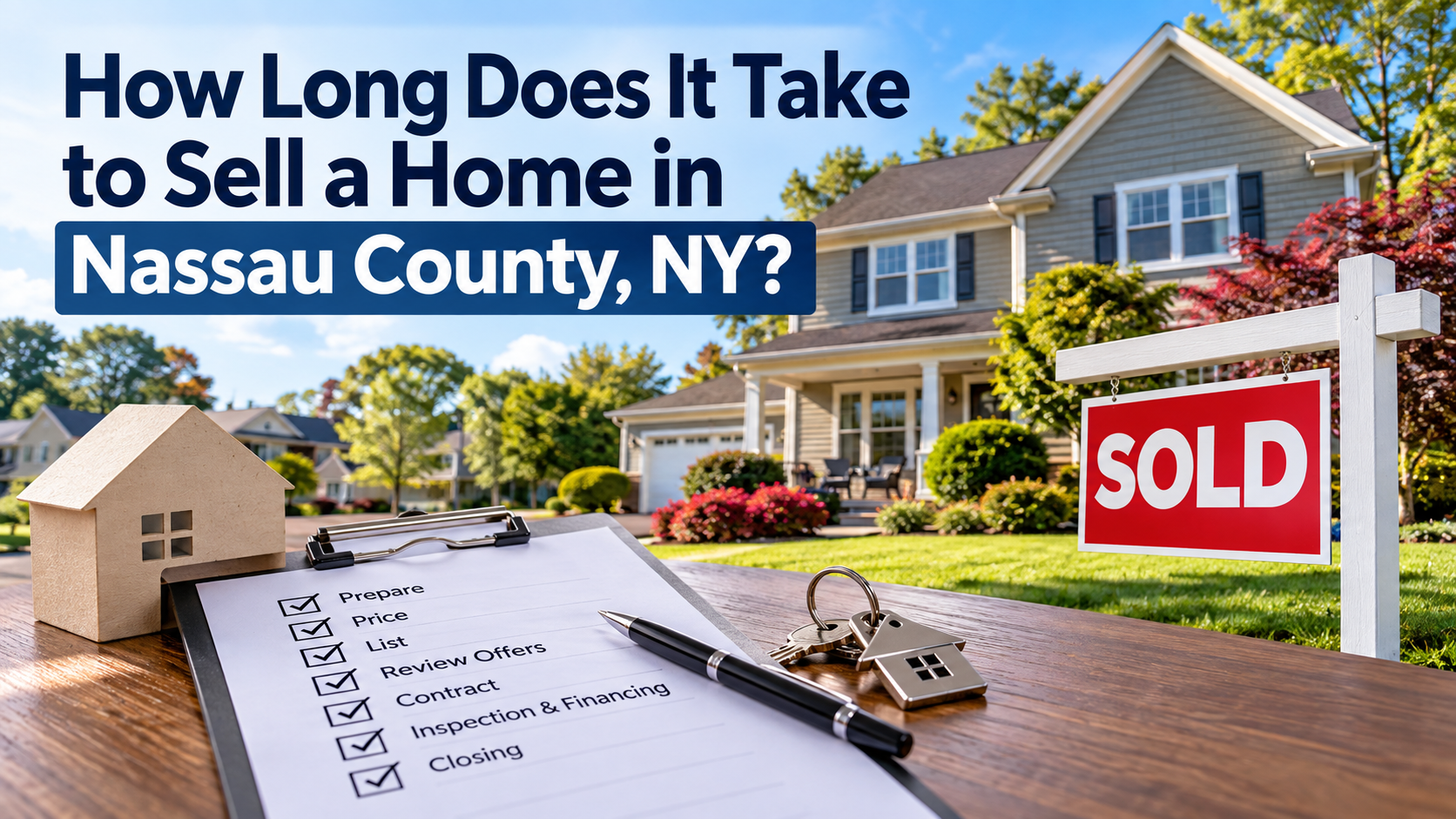
How long should a Nassau County home take to sell? There is no single reliable timeframe for every town or property. Ask for recent local days-on-market information for genuinely comparable homes.
Thinking About Selling in Nassau County?
If you are preparing to sell—or your home has been on the market longer than expected—an informed review of pricing, condition, competition, and presentation can help you decide what to do next.
Contact Raja Murthy at Murthy Real Estate to discuss your Nassau County home and a property-specific marketing approach. Visit murthy.realestate.
About the Author
Raja Murthy
is a licensed real estate salesperson with NB Elite Realty LLC, serving Nassau County and Long Island. A Farmingdale resident for more than three decades, he focuses on helping local buyers and sellers make informed real estate decisions.
Important Information
This article is for general educational purposes only and is not legal, tax, mortgage, or financial advice. Market conditions and individual property circumstances vary. Consult qualified professionals for advice specific to your situation.
Equal Housing Opportunity.
Brokerage: NB Elite Realty LLC. New York State Department of State licensing information: dos.ny.gov.